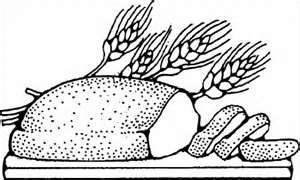
Wheatberry Soup

1 cup wheatberries
cold water for soaking (or 4 cups boiling water as an alternative)
5 cups plain tomato sauce
1½ cups navy beans
6 new potatoes, diced
1 large onion, sliced
4 cloves garlic, minced
5 tsp. ground cumin
1 Tbsp. turmeric
½ tsp. ground black pepper
2 green peppers, chopped
A soup made with wheatberries is a hearty, healthy beginning to a tasty biblical meal.
Soak the wheatberries overnight in cold water. If this is not possible, put 1 cup of wheatberries in a small pot with boiling water and simmer till all water evaporates. Berries will then be open and full.
Add berries to remaining ingredients in a large pot and cook for 1 hour on a low flame. Serve piping hot.
Yield: 8 servings
Cooking with the Bible
Home Recipes Meals Blogs About Help Order Book
MEAL
Entertaining Angels Unawares
RECIPES:
Sarah's Flat Barley Bread
Wheatberry Soup
Middle Eastern Vegetable Casserole
Camel's Milk
Dates with Honey and Ricotta Curds Spread
Grilled Kebab
Sumac Garnish
Angel Food Cake
BIBLE TEXT
The Text
The Lord appeared to Abraham by the oaks of Mamre as he sat at the entrance of his tent in the heat of the day. He looked up and saw three men standing near him. When he saw them, he ran from the tent entrance to meet them, and bowed down to the ground. He said, “My lord, if I find favor with you, do not pass by your servant. Let a little water be brought, and wash your feet, and rest yourselves under the tree. Let me bring a little bread, that you may refresh yourselves, and after that you may pass on—since you have come to your servant.” So they said, “Do as you have said.” And Abraham hastened into the tent to Sarah, and said, “Make ready quickly three measures of choice flour, knead it, and make cakes.” Abraham ran to the herd, and took a calf, tender and good, and gave it to the servant, who hastened to prepare it. Then he took curds and milk and the calf that he had prepared, and set it before them; and he stood by them under the tree while they ate.
Abraham cooked the meat by cutting it into small pieces and broiling them on skewers over an open fire.
Genesis 18:1–8, New Revised Standard Version
Biblical Passage Notes
“The Oaks of Mamre”: In Hebrew, Elonei Mamre or Alonei Mamre, the place where Abram settled and built an altar to God after dividing his household between himself and Lot. Some scholars have connected the place with ancient tree-worshipping cults, and such a connection would seem to emphasize the difficulty of Abram/Abraham's break from polytheistic traditions. Others indicate that Mamre was the name of an Amorite inhabitant of the area (that is, someone from the hill country or the vicinity of Jerusalem). Over the ensuing millennia, pilgrims have venerated the site because of Abram/Abraham's commitment to monotheism, though there is some question about the precise location of the oaks. Con-stantine, the 4th-century c.e. Roman emperor, consecrated one spot with the Basilica of the Terebinth of Mamre, but during the time of Saint Jerome, pilgrims held fairs under a growing oak tree. The Crusades brought renewed interest, and pilgrims celebrated the Feast of the Trinity at a supposedly original site, remembering the three strangers (God and two angels) who visited Abram/Abraham there.
The name Abu-ramu is sometimes taken to mean “lofty father,” but this is a doubtful translation of the Assyrian. The name Abraham is also thought to mean “ancestor of a multitude,” though that meaning is probably folklore, and there seems to be no linguistic evidence to support it. It is probable that Abraham is merely a dialectical variation of Abram.
The Preparation
This was a simple meal that Abraham prepared for his visitors, and probably the first instance of fast food in the Bible. It takes place near Hebron, about twenty-three miles south of present-day Jerusalem. The city itself is situated on a plain about 3,000 feet above sea level. To this place the three visitors arrived, we are told, and Abraham “hastened” to prepare a meal, as he was not expecting strangers, especially at hot midday, when one usually rests. Sarah was given the task of making the bread, the daily custom of grinding and baking reserved for the women of the household, most often the wife. Generally, flour was mixed with water, made into dough, and rolled out into cakes. The cakes were then placed on ground previously heated by fire, then covered with hot embers till baked. It was a quick process.1
Luckily the visitors were not in too much of a hurry, as preparing a calf from pasture to palate would take a bit longer. In the interest of time and hospitality, the calf would probably have been cooked either by roasting it whole (no fancy preparation or cuts) or by cutting it up into small, hacked pieces and broiling them on skewers over the fire. Many scholars point out that the meat would have been served with some sort of grain and vegetable dish (the KJV speaks of “corn,” but as it was originally a North American plant, probably barley or some other large grain was used). A bowl of camel's milk and some cheese or curds served as dessert; the 21st-century cook with a sense of humor might add or substitute Angel Food Cake.
Abraham served this meal, or something like it, at the terebinth of Mamre, a tall spreading tree or grove of trees, an ideal setting for today's cookout or picnic meal. The recipes that follow comprise an entire meal for six to eight people, yet they require some planning and advance preparation.
Many of the ingredients for these recipes are found in the Bible: yeast (Leviticus 10:12), flour (Numbers 15:4), salt (Ezra 6:9), saffron (Song of Songs 4:14), honey (I Kings 14:3), walnuts (Song of Songs 6:11), cinnamon (Exodus 30:23), mint (Luke 11:42), endive (one of the “bitter herbs' of Exodus 12:8), leeks and garlic (Numbers 11:5), olive oil (Luke 16:6), egg whites (Job 6:6), veal (I Samuel 28), cumin (Isaiah 28:25, 27), cucumbers (Isaiah 1:8), and goat cheese (II Samuel 17:29), but feel free to substitute or adapt as needed. It will still be a heavenly meal!
Notes1. See Gerhard von Rad, Genesis: A Commentary(Philadelphia: Westminster Press, 1972), 206.
The History
The story begins approximately 3,900 years ago (about 1900 b.c.e.), in the city of Ur in Babylonia. There, according to Jewish tradition, a boy named Abram Abu-ramu in Assyrian, or Avram in transliterated Hebrew) was born to Terah (or Terach), a seller of religious idols, and his wife.
At that time, the city of Ur, otherwise known as Ur Kasdim or Ur of the Chaldees (an indication that the city was located in southern Babylonia), was a busy cosmopolitan area, situated at the crossroads of ancient migration pathways. Centered on the nearby Tigris and Euphrates Rivers, Mesopotamia, as this part of what is now Iraq was known, was and still is a giant floodplain. With no natural defenses, it was often invaded by peoples from the east and the north, who desired to farm its vast expanse of fertile land. The Tigris and Euphrates themselves carried a heavy traffic of both trading goods and migrants, downstream to what is now known as the Persian Gulf and upstream as far north as modern-day Syria and Turkey. Until about 1900 b.c.e., Mesopotamia was ruled by the Sumerians, who were the first to develop writing in order to keep track of their administrative records. But then a tribe known as the Amorites moved south from the Syrian desert and conquered Sumer, laying the foundation for the Babylonian Empire.
Ur was dedicated to Nannar, the moon god. According to recent archaeological studies, nearly one-quarter of Ur was set aside as temple grounds for Nannar. The other Babylonian deities had temples scattered throughout the rest of the city. The polytheism of Ur—indeed, of all of Mesopotamian civilization in this age—reveals just how radical Abram/Abraham's monotheism was; so revolutionary, in fact, that it can be said to have changed the course of history.
The exact date of Abram's birth is uncertain. In fact, as there are no extra-biblical sources for his biography, scholars disagree about whether he was a historical personage or a religious allegory—that is, a personification of one particular nomadic tribe. As the book of Genesis relates the story, Abram's life in Ur was unremarkable. He married a woman named Sarai, but they were unable to have children. At some point, Terah took Abram, Sarai, and their nephew Lot to Haran, a flourishing city some 600 miles northwest of Ur, on the trade routes to Damascus. Like Ur, Haran was the seat of worship of the moon god. There they settled, until the death of Terah.
Soon thereafter, as the story goes, when Abram was seventy-five years old, he received a call from God to leave Haran and travel to Canaan, the land between the Mediterranean Sea and the Dead Sea/Jordan River (roughly the area occupied by present-day Israel). To follow this call, Abram had to leave his own people, travel across the desert, and settle among strangers. What's more, Abram had to pledge his allegiance to one god. In Sumeria/Babylonia and in Canaan, the people worshipped a whole pantheon of gods, offering sacrifices to this one for good harvests, to that one for good commerce, and so forth. By agreeing to follow God's call, Abram was turning his back on the gods of his youth and committing himself to the idea that Yahweh was the one and only God, and that all other so-called gods were imposters or shams. Thus, Abram is considered the father of monotheism. In return, God promised to create a great nation through Abram. When Abram arrived in Canaan with his wife and nephew, God amplified the promise by pledging that Abram's offspring would possess that land—even though Abram was already advanced in years and he and his wife were unable to conceive.
In this age (the Middle Bronze Age, c. 2200–1550 b.c.e.), the area now known as Israel/Palestine was thinly populated, with few sedentary populations, as there was little arable land. Cisterns, or wells, had not come into general use, and springs were rare. Virtually all the towns were located in the Coastal Plain, the Plain of Esdraelon, and the Valley of the Jordan and of the Dead Sea. Most of the inhabitants were seminomadic, wandering freely over the heavily forested hills of the central region and the dry areas to the south. So it is not unusual that in the following years, Abram and his household moved south into the Negev desert, sojourned in Egypt, then returned to the Negev, accumulating large herds of sheep, oxen, donkeys, and camels and becoming rich in silver and gold. After a falling out with Lot, Abram sent his nephew east toward the plain of the Jordan and took the rest of his household north to Canaan, settling “by the oaks of Mamre,” near present-day Hebron. Though Abram and Sarai continued childless, God still promised to make Abram's descendants as numerous as the stars.
Because a man's wealth was measured not only in gold and livestock but also in wives and children, Abram was a laughingstock among his neighbors, for he had wealth but no direct heirs and only one wife. Feeling this disgrace herself, Sarai, also advanced in years, urged her husband to have children with her Egyptian slave-girl Hagar, who was (according to some legends) a daughter of Pharaoh. Hagar bore a son and called him Ishmael. But Sarai felt even more disgraced by her childlessness, and she jealously drove Hagar and her son out of the household and into the desert. By this time, Abram was eighty-six years old and despaired of having any so-called legitimate heirs.
But as Genesis relates, God intervened. When Abram was ninety-nine years old, God appeared to Abram and established a covenant (contract) with him: God gave Abram the name Abraham (or Avraham, in transliterated Hebrew), gave Sarai the name Sarah, and promised that they would bear a son in a year. In return, Abraham and all the male members of his household would be circumcised, as a reminder that they and all their offspring were God's people. Genesis offers two accounts of this promise to Sarah, and one of them is the story of how Abraham provides a special meal to “three men,” or perhaps God and two angels, who appeared to him while he was sitting at the entrance to his tent—as related in the scripture text above. A year after this meal, Abraham's son Isaac was born of Sarah.
Thus, according to Jewish tradition, through Isaac and his children, Abraham became the father of the Jewish people. According to Arab traditions, through Ishmael, Abraham was the father of all the Arab peoples. Jews and Muslims as well as Christians revere Abraham for his faith in God's covenant and his belief in the face of seeming impossibilities, and all three monotheistic religions cite his hospitality to strangers as an ideal to be followed.